
The Return of the Trade Show
Frankie Robson, Origination & Marketing Lead
July 13, 2026
Trade shows have had a difficult few years. Now they’re back, bigger in some cases than before, and marketers are having to rethink what makes an event.
The pandemic hit hard
It’s not easy to forget quite how disruptive 2020 was for the events industry. According to UFI, the Global Association of the Exhibition Industry, global exhibition industry revenues fell by 68% in 2020 compared with 2019, wiping out an estimated €200 billion of exhibition-related economic output worldwide. In the US specifically, data from the Center for Exhibition Industry Research (CEIR) shows that roughly 98% of scheduled B2B exhibitions were cancelled in the second half of 2020 alone. For manufacturers and industrial businesses who relied on shows like Glasstec, Electronica, Bauma, etc. to meet buyers face to face, that meant a sudden and total loss of one of their most effective channels.
An online opportunity
When in-person events stopped overnight, several of our clients needed a fast alternative, and we helped them move quickly into online events and webinars. What started as a temporary measure turned into something that worked in its own right, and demand for it never really went away.
That wasn’t a one-off reaction. UFI’s own industry research from that period found that 82% of exhibition organisers recognised a shift toward more hybrid and digital events, with half of companies increasing their investment in digital options as a result.
That shift has proved durable rather than temporary: the global virtual events market, valued at around $98 billion in 2024, is projected to reach $297 billion by 2030, according to Grand View Research. Webinars in particular have earned a permanent place in the mix: Contrast’s 2026 research found that 91% of B2B professionals now name webinars as their preferred content format, and Livestorm’s 2026 Webinar Benchmark Report found that 51% of B2B companies rate webinars as critical to their strategy, describing them as revenue infrastructure rather than a one-off marketing tactic.
But in-person events are back too
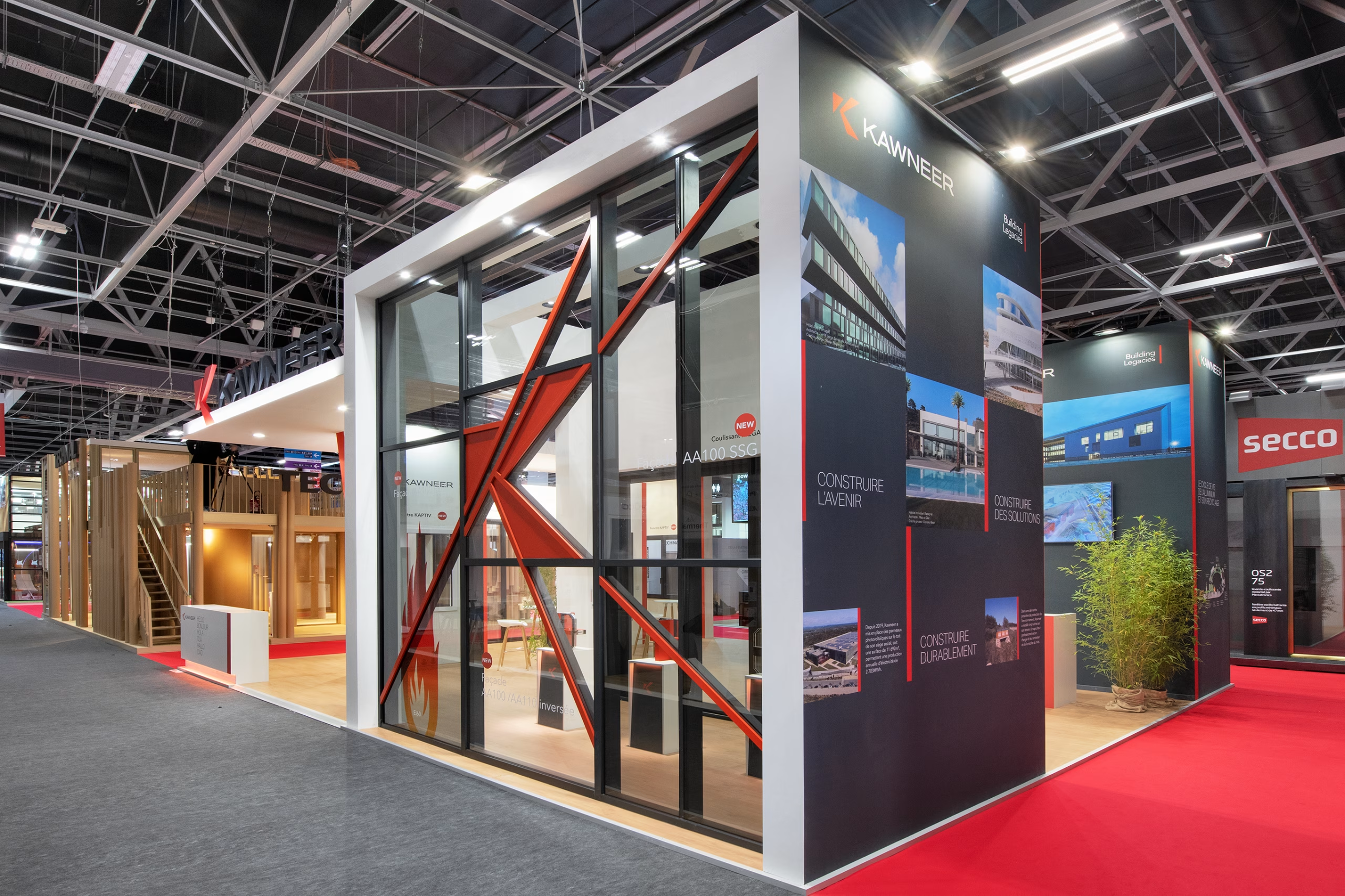
Here’s the twist: trade shows haven’t been replaced by any of this, they’ve recovered alongside it. By 2026, US trade show attendance had returned to between 98% and 104% of 2019 levels, according to ShowHero’s State of Trade Shows report, and EndeavorB2B’s 2026 Marketing Benchmark Report found that 49% of organisations are increasing their in-person event budgets this year, while 37% are also expanding their virtual event activity. This isn’t an either/or story. Businesses are investing in both.
What this means for your events plan
For clients in industrial sectors, where shows are central to reaching the right buyers, this points to a hybrid approach:
Use the trade show for what it does best: real conversations with buying decision-makers, product launches, and relationship building in a setting no webinar can fully replace.
Use webinars and online events for what they do best: reaching people who couldn’t attend in person, keeping the conversation going between shows, and generating leads at a lower cost per contact.
Neither replaces the other. The businesses getting this right in 2026 are the ones treating trade shows and online events as two parts of the same programme, not competing budget lines.
If you’re planning your event calendar for the year ahead, whether that’s a trade show, a webinar series, or both, we’d be glad to talk it through with you.
Contact sales on info@armstrongb2b.com